
Okay, so check this out—I’ve been poking around Solana explorers for years, and honestly some parts still surprise me. Whoa! At first glance a transaction page looks like a jumble of hex and program IDs. But dig a little deeper and you get a clear, auditable story: who paid whom, which program ran, and how many lamports moved. Hmm… something felt off about explorers when I started; they seemed either too technical or too shallow. My instinct said there was a middle path. Initially I thought an explorer was only for devs, but then realized regular users need it more—especially when NFTs and money are on the line.
Here’s the thing. A good explorer is a translator. It turns slots and signatures into plain actions. Really? Yes. You can trace an NFT from mint to marketplace sale. You can check exactly how much SOL a swap cost in fees. And you can tell whether a transaction is stuck, confirmed, or finalized. I’ll walk through the practical steps I use daily—tips you can steal—and some gotchas that have tripped up even experienced people. I’m biased, but some features matter way more than others when you’re troubleshooting.
Start with the basics. Every transaction on Solana has a signature (a long base58 string). Short sentence. Paste that into an explorer’s search bar. Medium thought: you’ll see a top-level summary with status, block time, slot number, and fee. Longer: from there, look for parsed instructions and inner instructions—those reveal which program was invoked and the nested moves that might not be obvious at first glance, like transfers by a program or rent-exempt account creations.
When tracking NFTs, look for token metadata and transfer events. Wow! Transactions that mint or transfer NFTs will often reference the Metaplex program or other NFT standards. Medium: check token balances on the affected addresses and view associated token accounts. Longer: the metadata account stores the JSON URI pointing to artwork and attributes, so if the metadata URI is missing or broken you’ll see a hint right away in the account data or logs.
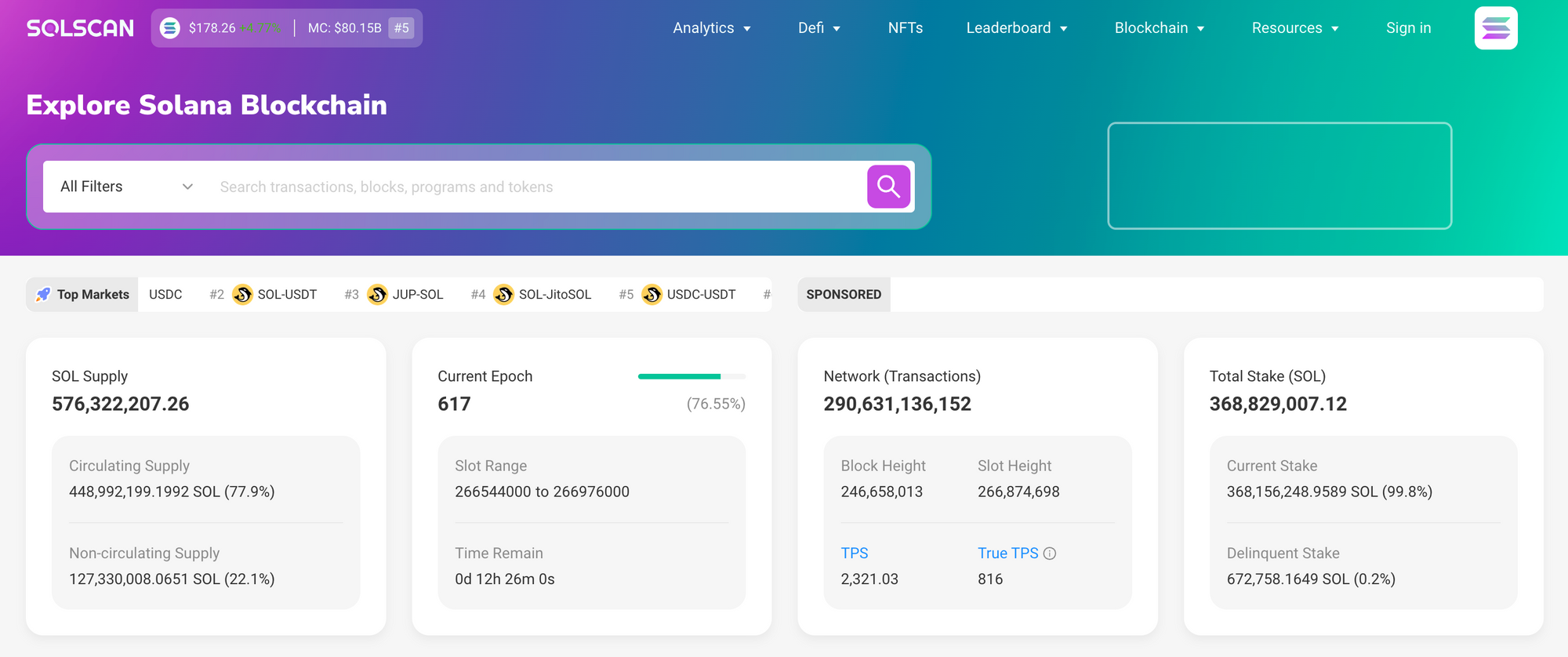
One recommended explorer to bookmark
Okay, so if you want a starting point, try this: https://sites.google.com/cryptowalletextensionus.com/solscan-explorer-official-site/. Seriously? Yes. That page links you to the Solscan Explorer official site and is handy when you need an interface that balances clarity with depth.
Now some practical workflows. Short sentence. First: confirming a sale or transfer. Paste the signature, check status (confirmed vs finalized), then inspect inner instructions. Medium: finality on Solana has nuances—’confirmed’ means cluster consensus is likely, while ‘finalized’ means the block is rooted and much harder to revert. Longer: if a transaction was confirmed but not finalized, be cautious about assuming permanence—although reorgs are rare on Solana, they’ve happened, and for high-value NFT trades you want to ensure finality before moving on.
Next: diagnosing failed transactions. Whoa! Failure messages matter. Medium: programs often emit error codes, and logs show which instruction failed. Longer: read the logs line-by-line; often you’ll see an “insufficient funds” or “account not rent exempt” message that tells you exactly what to fix—maybe you forgot to allocate an associated token account, or your wallet didn’t include enough lamports for rent.
Fees and cost analysis is something I check every single day. Short sentence. Solana fees are generally low, but they vary. Medium: convert lamports to SOL (1 SOL = 1,000,000,000 lamports) to understand the real cost. Longer: on complex transactions—like multi-hop swaps or cross-program invocations—the computational units and therefore fees can spike, so inspect the fee field and the compute units consumed in the logs.
For NFT collectors there are two big pitfalls. Short. First: invisible token accounts. Medium: an NFT can be owned by an associated token address you might not recognize, and if you don’t attach that token account to your wallet UI you won’t see the NFT even though the chain shows it. Longer: second, metadata URIs can be mutable; a project might point metadata to a new URL after minting, so check the metadata account history if something smells fishy—sometimes artists update metadata to fix errors, other times scamps change links.
Developer tip: decode instructions rather than relying solely on the parsed view. Wow! The raw transaction gives you program IDs, bytecode, and instruction data. Medium: most explorers provide a parsed representation, but parsing can be incomplete for custom programs. Longer: if you’re auditing a custom contract, grab the raw instruction data and cross-reference it with the program’s ABI or source to ensure the instruction values match expected behavior.
Privacy and security—don’t skip this. Short sentence. Public ledgers are public. Medium: anyone can see token holdings and transfers associated with an address. Longer and more important: use different addresses for different activities if you care about privacy, and never paste private keys into explorers or third-party tools; an explorer is for read-only analysis only.
Little tricks that save time. Short. Use program filters to find all transactions interacting with a specific program ID—handy for tracking a particular marketplace or staking program. Medium: export CSVs where available for batch analysis of transfers and fees. Longer: when tracking many NFTs across collections, scripting calls to the explorer’s API (if available) lets you monitor events automatically rather than clicking around—this is how I keep alerts on suspicious activity without staring at the screen all day.
Okay, a few caveats. I’m not 100% sure about every custom program out there—there are thousands. Somethin’ may be different. Medium: explorers vary in how they present inner instructions and logs, and some features are explorer-specific. Longer: if you rely on an explorer’s parsed view for legal or financial decisions, cross-check the raw data and, when necessary, the RPC node directly—relying on a single UI can hide edge-case inconsistencies.
FAQ
How do I find an NFT’s history?
Search the mint address or the token account in the explorer. Short sentence. Then view the transaction list and inspect transfers. Medium: look at the metadata account for creator and update authority information. Longer: if you need to prove provenance, export the tx history and include signatures and block times as evidence.
Why did my transaction fail but still consume fees?
Because compute was used. Short. Programs reserve compute units even on failure. Medium: the cluster charges fees for consumed resources regardless of outcome. Longer: read the logs to see which instruction failed; sometimes a preflight check would have caught it but preflight differs from actual execution.
What does ‘confirmed’ versus ‘finalized’ mean?
‘Confirmed’ implies consensus but not rooted permanence. Short sentence. ‘Finalized’ means the block is rooted and very unlikely to be reverted. Medium: for big moves wait for finality. Longer: for most daily activity confirmed is fine, but in contested situations wait for finalized status to be safe.